Skip to content
8228 Drone Works8228Drone Works

Services

Every exterior surface, matched to the correct method

We do not use one tool on every surface. Soft washing where pressure would cause damage, high pressure where the material can take it, deionized water everywhere that spotting matters.

01 / 06

High-Pressure Washing

Some surfaces need a soft touch. Others just need to get hammered. Concrete driveways, brick walkways, parking structures, and loading docks are built to take abuse.

The grime that accumulates on hard flatwork — oil, tire marks, embedded dirt — will not lift with low pressure. Soft washing a loading dock is a waste of everyone’s time.

We match the method to the material. Where high pressure is the correct tool, we use it properly, with surface cleaners that produce even results instead of wand stripes.

  • Driveways, walkways, and loading docks
  • Parking structures and concrete flatwork
  • Oil stains, tire marks, and embedded grime
  • Even results without wand striping
Learn more about high-pressure washing

02 / 06

Exterior Window Cleaning

Most companies still send crews up ladders and lifts to squeegee your exterior glass, and once it dries you are left looking at streaks, spotting, and the panes they could not safely reach.

High-rise glass, multi-story window walls, and skylights are dangerous and expensive to reach with traditional methods — which is why the hardest panes are the ones that stay dirty.

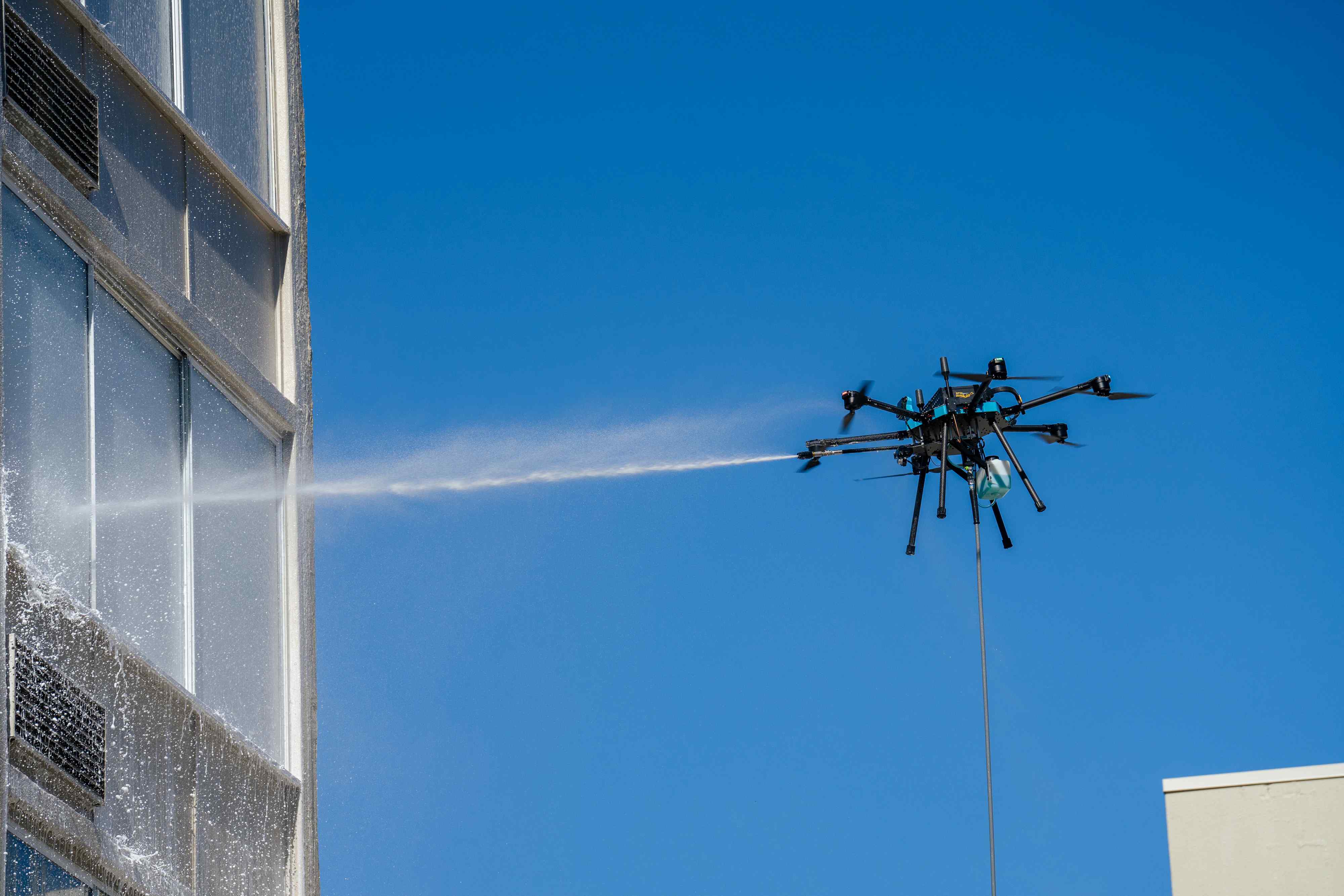
Our drones deliver deionized pure water to exterior glass at any height — high-rises, multi-story window walls, and skylights — cleaning the panes ladders and lifts cannot safely reach.

  • High-rise glass, window walls, and skylights
  • Deionized water dries without streaks or spotting
  • No ladders or lifts against the building
  • Reaches panes traditional methods cannot
Learn more about exterior window cleaning

03 / 06

Residential Soft Washing

After a Utah winter — or a summer of heavy pollen — the stucco that used to be crisp and white has a gray film on it, there is a green tinge along the shaded walls, and the trim looks dingy.

Too much pressure on stucco, EIFS, or painted siding can force water behind the surface, damage the finish, void paint warranties, or strip protective sealants. You end up with a clean-looking exterior hiding moisture damage you will not discover until later.

We use the low-pressure soft washing method that roofing and siding manufacturers recommend. The right solution breaks down mold, mildew, and algae at the source, then we rinse at a pressure that is safe for your surfaces.

  • Safe for stucco, EIFS, and painted siding
  • Will not void paint or finish warranties
  • Treats the cause, not just the surface
  • Results last longer than pressure alone
Learn more about residential soft washing

04 / 06

Roof Cleaning

That dark streaking on your shingles is not dirt. It is a bacteria called Gloeocapsa magma, and it has been breaking down your roofing materials the whole time it has been up there.

The instinct is to blast it off with a pressure washer. High pressure strips the granules from asphalt shingles — the granules that protect the asphalt from UV and keep the roof weather-tight. You get a clean-looking roof that just lost years of its lifespan in one afternoon.

Soft washing: low pressure plus the correct solution that kills algae, moss, and lichen at the root. Our drones deliver it across every section — including steep and awkward areas — without anyone walking on your shingles.

  • Kills algae and moss at the root, so results last
  • No granule loss from high pressure
  • Reaches steep and awkward roof sections
  • Follows shingle manufacturers’ warranty care guidelines
Learn more about roof cleaning
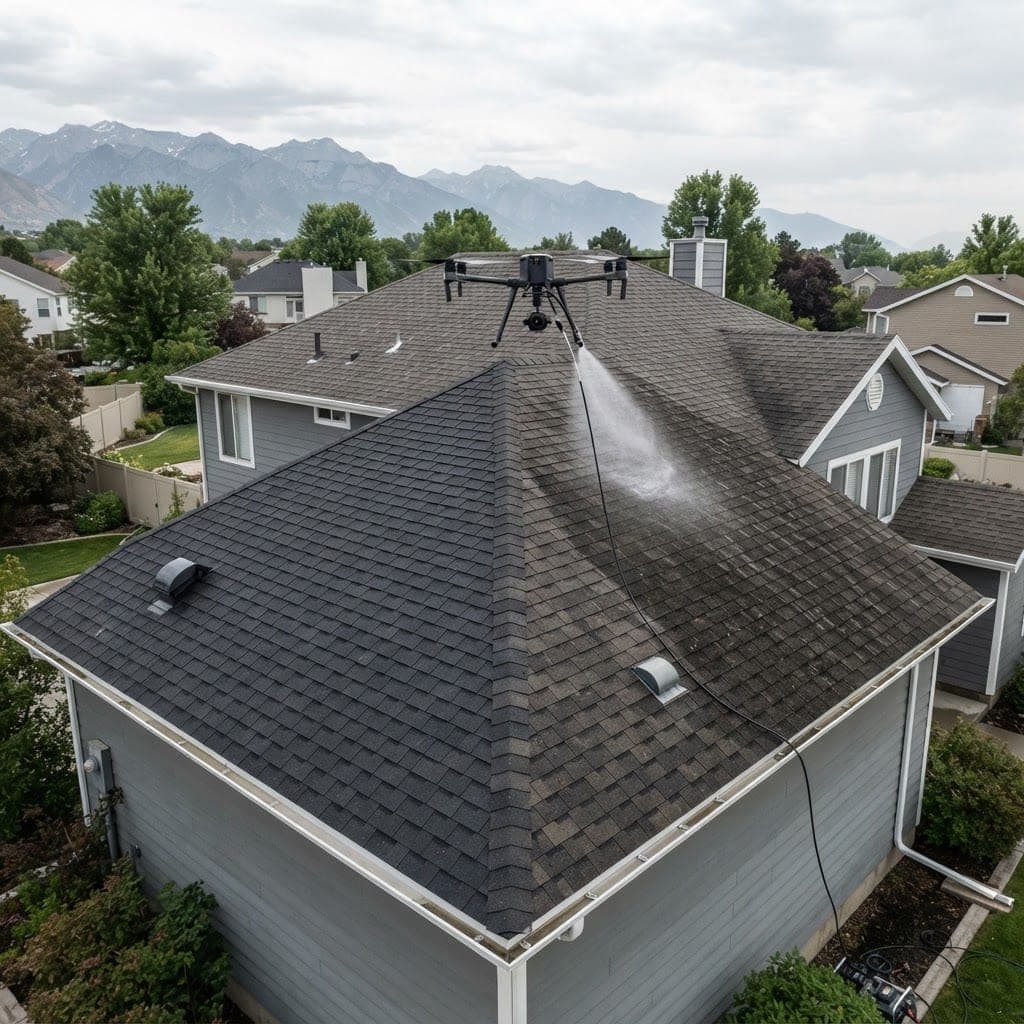
Drone soft-washing an asphalt shingle roof, with cleaned area contrasting against remaining algae streaks

05 / 06

Solar Panel Cleaning

You invested in solar to reduce what you spend on energy. A dirty panel is not just less effective — it can lose up to 25 percent of its output from a single season of dust, pollen, and grime.

Cleaning panels is not as simple as hosing them off. Tap water leaves mineral deposits that block light transmission just like dust does. Brushes risk scratching the glass or degrading the anti-reflective coating. And sending someone up to walk around creates risk to your panels, your roofing, and your mounting hardware.

We use deionized pure water — filtered to remove all minerals — delivered by drone at the right pressure for solar glass. It cleans completely and evaporates without leaving anything behind.

  • Recovers output lost to dust, pollen, and desert grit
  • No mineral residue left on the glass
  • No foot traffic on panels, roofing, or mounts
  • Meets panel manufacturers’ care requirements
Learn more about solar panel cleaning
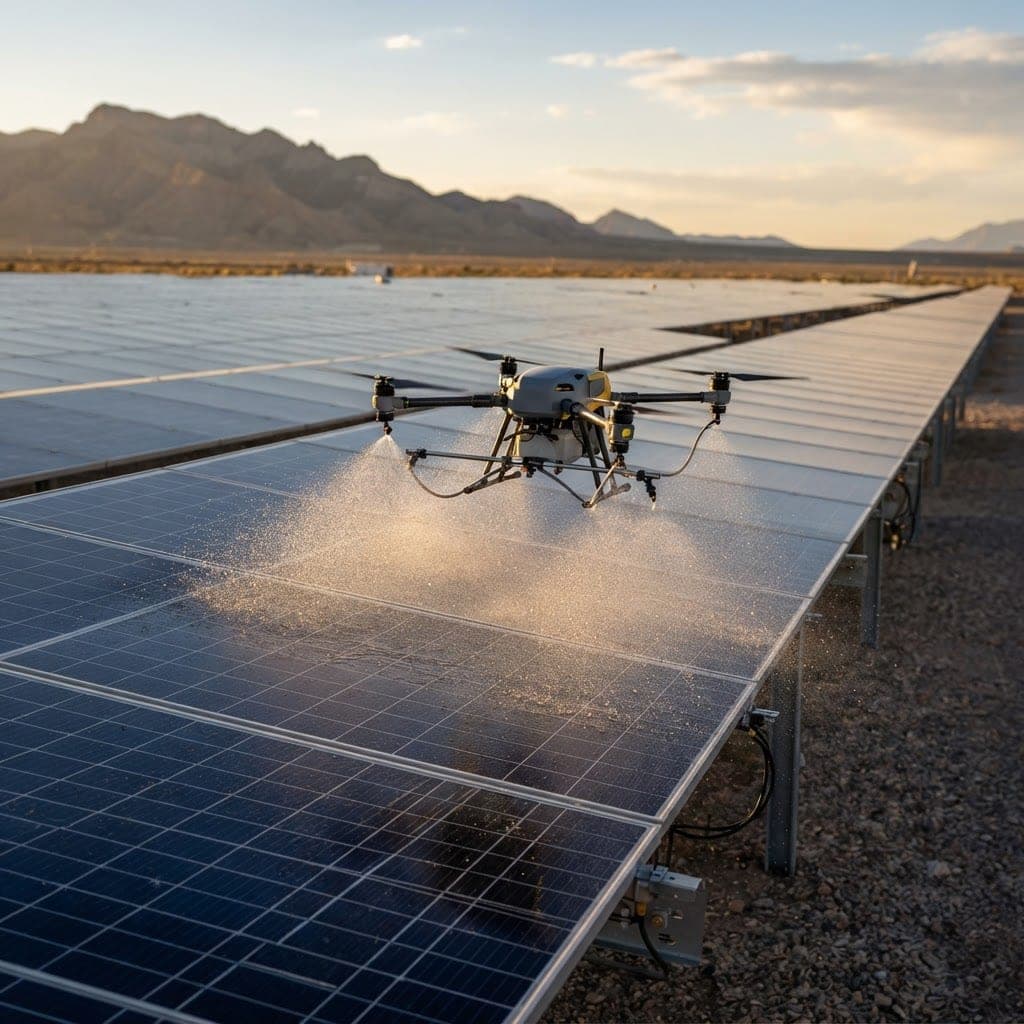
Cleaning drone spraying deionized water across a large array of solar panels at golden hour

06 / 06

Facade & Building Exterior Cleaning

Dust in every crevice, hard water streaks from the irrigation system, mold creeping up the north-facing corners. It does not mean the building is neglected. It means it is a building.

Cleaning it the traditional way brings everything that comes with it: scaffolding that costs a fortune to rig and takes days to set up, rope access crews that make tenants nervous, and heavy lift equipment that tears up landscaping and blocks parking. After all that, results are inconsistent — crews rushing at height, missing sections, leaving equipment marks on your materials.

Our drones eliminate all of it. Pilots work from the ground, cover every elevation at consistent pressure, and nothing touches your building but pure water.

  • No scaffolding rigging or lift permits
  • Tenants stay in the building and parking stays open
  • Consistent coverage across every elevation
  • Deionized water leaves no mineral spotting
Learn more about facade & building exterior cleaning
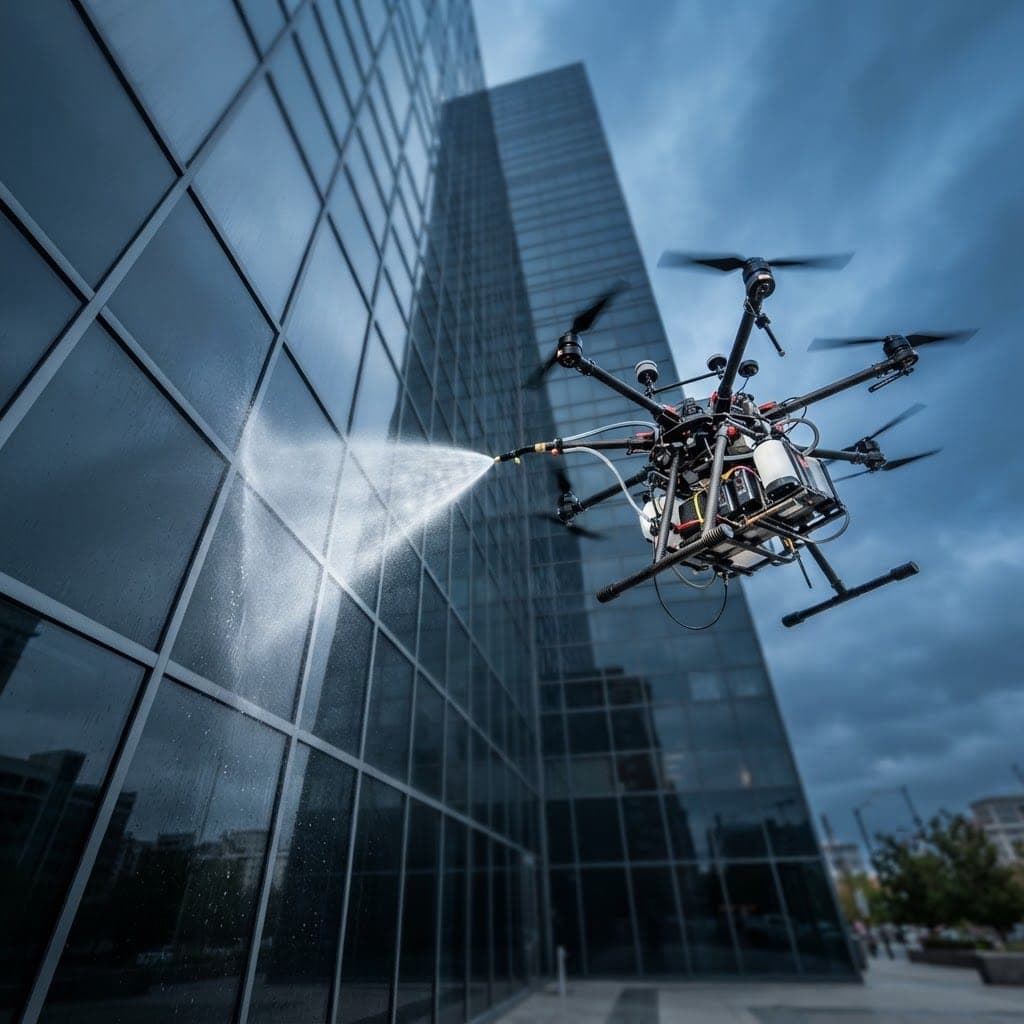
Cleaning drone hovering beside a glass high-rise office tower, spraying pure water across the facade

Not sure which method your property needs?

Tell us the surface and the problem. We will tell you which approach we would use and why.